Case · bars and restaurants
An agent that balances the till every morning
It reads the point-of-sale daily close and the bank statement, cross-checks them, and flags what does not add up. Running since September 2026 in a bar in Panama City.
The bar is ours. This is not a client who let us show their case: we use it every day, which is why we can tell you how it works inside.
What it was like before
- The information arrived scattered: the point-of-sale close by email, the bank on its website, stock somewhere else.
- Nobody cross-checked sales against deposits. If the bank settled short, you found out at month end. Or you did not.
- The daily close email got a glance at best. A weak day, a report that never arrived or a product running out went unnoticed.
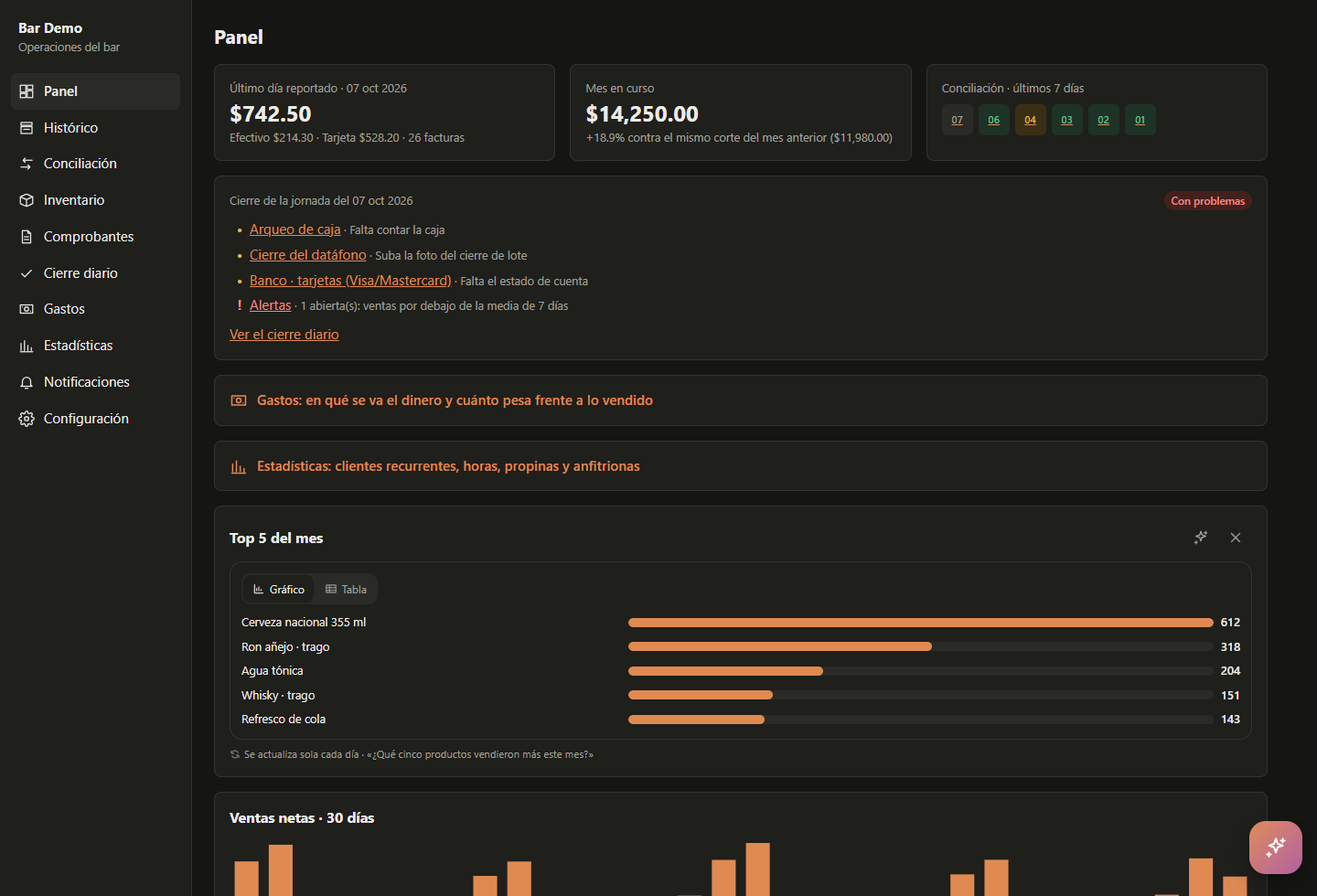
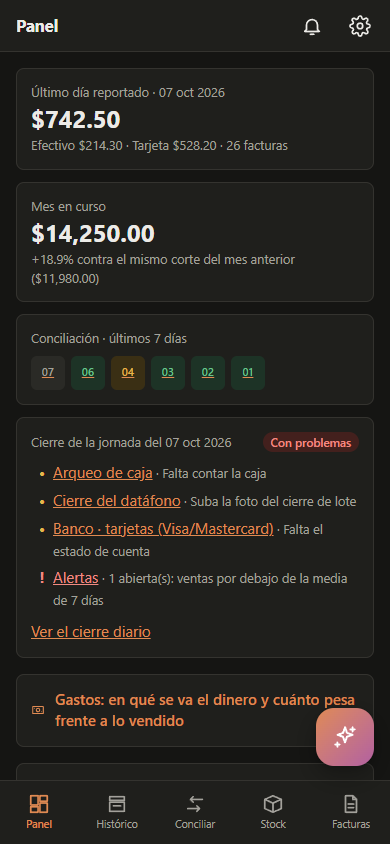
Eleven checks every morning
At seven in the morning, with nobody having to remember, the agent reviews the previous day and leaves the problems on the home screen:
- That the point-of-sale close arrived — and it knows the difference when the bar did not open.
- That the email could be read in full, and it says so when it could not.
- That the bank settled the card sales, channel by channel: Visa and Mastercard, Clave, Yappy and cash.
- That the day is not far below the week's average.
- That the cash count matches the expected cash, within the tolerance you set.
- That the card terminal's batch close matches what was charged to cards.
- That the physical count matches the expected stock.
- That nothing is below its minimum.
- That the bank statement has not gone days without being imported.
- That no payable slips past its due date.
- That the mailbox connection is still alive — if it expires, everything above would quietly stop working.
Doing this by hand is about fifteen minutes a day. That is why almost nobody does it. What used to surface at month end — or never — now shows up the next morning, while a card settlement gap can still be disputed with the batch in hand.
The point-of-sale system was never touched
This is usually what decides whether a project like this happens. The bar's billing system already emailed its close every night; the agent reads that email. No integration, no permission from the POS vendor, no change of system. The bank statement is downloaded from online banking and uploaded from the phone: CSV, Excel or PDF, and uploading the same file twice duplicates nothing.
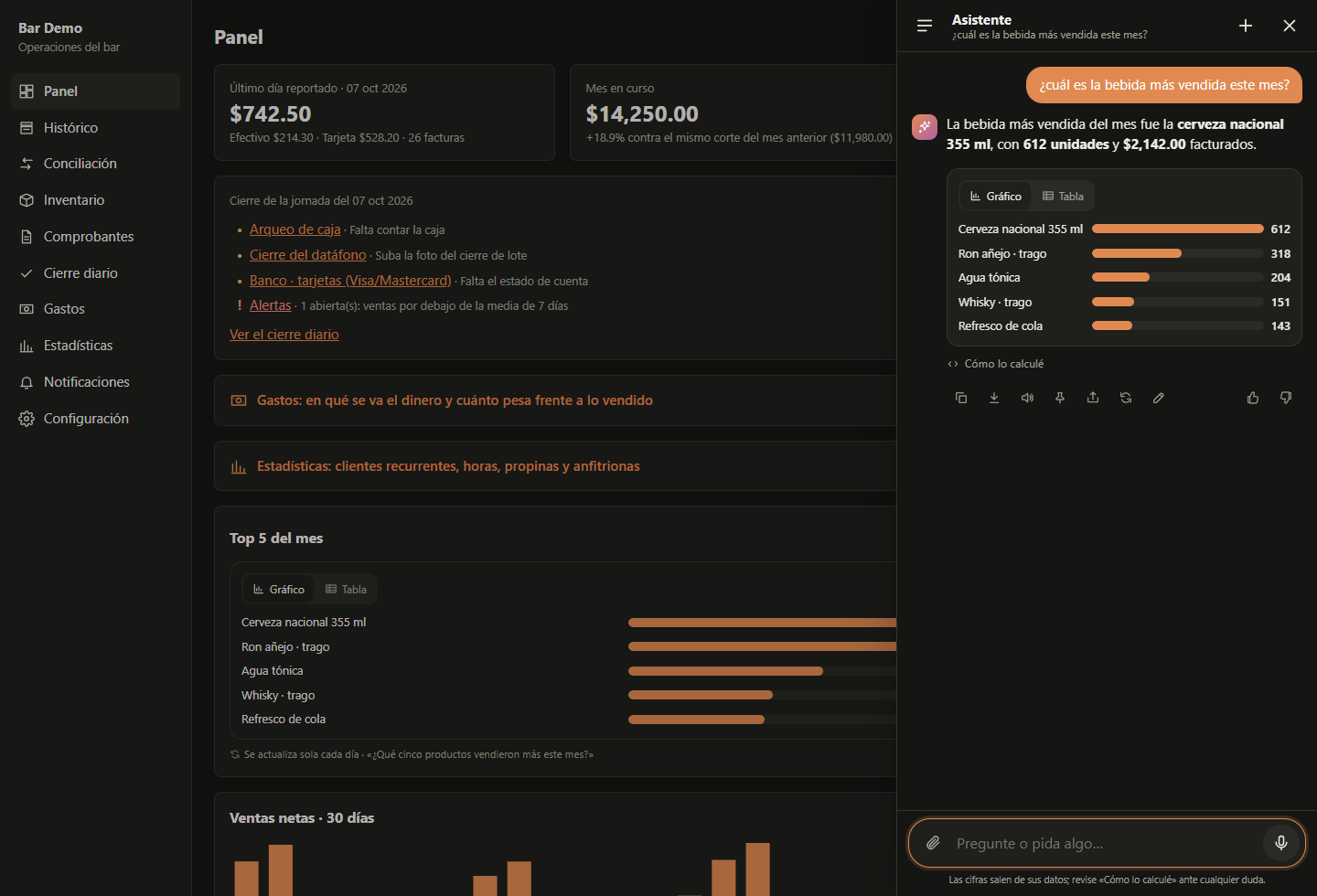
Asking without knowing how to query a database
«How much beer did I sell in September?», «which days did the till not balance?», «what is running out?». The answer comes with its chart and its table, and underneath a link showing the exact query behind it. That is not an engineering detail: it is the difference between a number you can verify and one you have to take on faith.
What it does not do
- It moves no money and touches no banking system: it reads a file you download.
- It invents no figures. If a day's report never arrived, it says so; it does not estimate it.
- The agent that answers questions queries with a read-only user, under a time limit and with no access to the original email.
- Anything a model extracts instead of the rules stays marked as partial until it is verified.
Questions we get
- Does this work with a different point of sale?
- It depends on whether it emails a readable close, which is the norm. That gets checked in the diagnostic, before anything has to be decided.
- What if my bank is a different one?
- Transaction classification has rules for one Panamanian bank's patterns and uses judgement only for what falls outside them. A different bank means adjusting those rules, not rebuilding the system.
- Is this a product I can buy?
- It is a custom build, and the agent for bars and restaurants with a published price came out of it. What you see here is how far it goes when built in full.
Does your till balance on its own?
The diagnostic is free, takes 45 minutes, and tells you whether your point of sale and your bank make something like this possible.